Bariatric surgery, also called weight loss surgery, is a category of surgical operations intended to help people with obesity lose weight. Healthcare providers may recommend bariatric surgery if other weight loss methods have failed and if obesity appears to pose a greater risk to your health than surgery.
Bariatric surgery procedures work by modifying your digestive system — usually your stomach, and sometimes also your small intestine — to regulate how many calories you can consume and absorb. They can also reduce the hunger signals that travel from your digestive system to your brain.
These procedures include gastric bypass, sleeve gastrectomy, gastric band and duodenal switch. These operations have proven results in treating class III obesity. They also help normalize your metabolism, including blood sugar, blood pressure and cholesterol.They can help treat and prevent many metabolic diseases related to obesity, including diabetes and fatty liver disease. But weight loss surgery isn't an easy “quick fix”. It requires preparation beforehand and long-term lifestyle changes afterward to be successful.
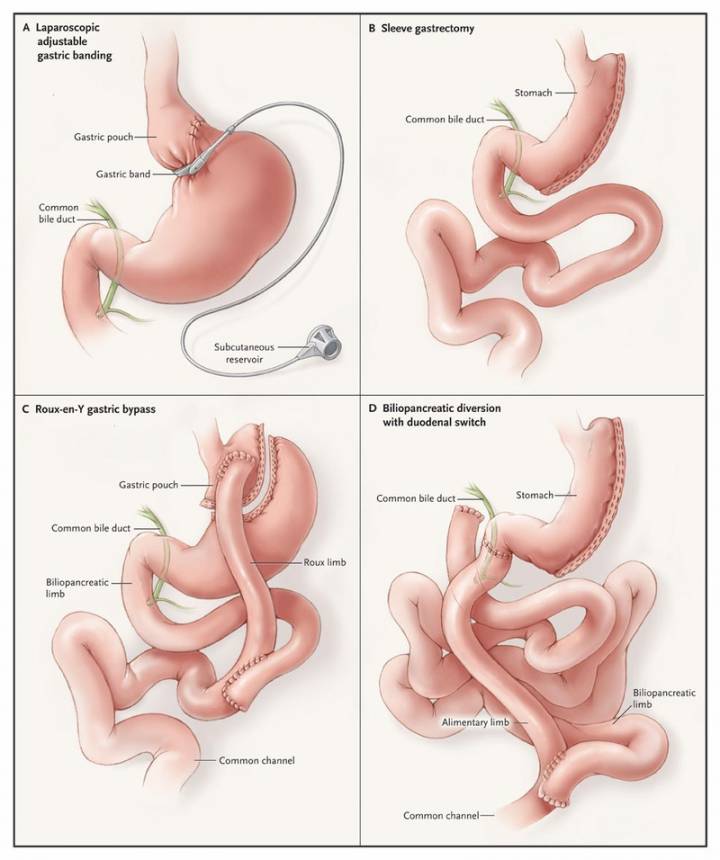
The gastric sleeve, also called sleeve gastrectomy, is the most commonly performed bariatric surgery. This may be because it’s a relatively simple procedure that's safe to perform on most people with little risk of complications. The gastrectomy simply removes a large portion of your stomach — about 80% — leaving behind a small, tubular portion, like a sleeve. This naturally reduces the amount of food you can consume in one sitting and makes you feel fuller faster. But it also reduces the hunger hormones that are normally produced in your stomach. This helps to stabilize your metabolism, decreasing your appetite and regulating your blood sugar.
The gastric bypass is also known as the “Roux-en-Y," which is a French term meaning “in the form of the letter Y.” With this procedure, your small intestine will end up in that form. First, surgeons create a small pouch at the top of your stomach, separating it from the lower portion with surgical staples. Then they divide your small intestine and bring the new segment up to connect to the stomach pouch. Food will now flow through the new, smaller stomach and lower segment of your small intestine, bypassing the rest. This restricts how much your stomach can hold and also how much nutrition your small intestine can absorb. Restricting the small intestine makes this method more effective than gastric restriction alone.
This is the original version of the duodenal switch, an operation that combines a sleeve gastrectomy with an intestinal bypass. (It sometimes goes by a shorter name: Gastric Reduction Duodenal Switch). It’s similar to the Roux-en-Y gastric bypass but more extreme. This operation bypasses most of your small intestine — about 75%. This significantly reduces the hunger hormones produced in your small intestine as well as in your stomach. It also significantly restricts how much nutrition your small intestine can absorb. This is what makes the duodenal switch the most effective surgery for weight loss and for improving metabolic syndromes like diabetes. But it can also make it hard for your body to absorb enough nutrients to stay healthy.
This newer procedure is a modified version of the original duodenal switch, intended to reduce complications. It also goes by the names Loop Duodenal Switch or SADI-s. Early results are still being studied, but so far it appears promising that this version may eventually replace the original duodenal switch. Like the original, it begins with a sleeve gastrectomy, then divides the first part of the small intestine just after the stomach (the duodenum). This time, the small intestine is reattached as a loop, which requires just one surgical connection (anastomosis) instead of two. It also means that less of the small intestine is bypassed, allowing for a little more absorption of nutrients.
High Cholesterol: Hyperlipidemia (high cholesterol) means your blood has too many lipids (fats) in it. These can add up and lead to blockages in your blood vessels. This is why high cholesterol can put you at risk for a stroke or heart attack.
High Blood Pressure: Hypertension (high blood pressure) means the force of blood flowing through your blood vessels is too high. This wears down the walls of your blood vessels and puts you at greater risk of heart attack and stroke.
High Blood Sugar:Hyperglycemia (high blood sugar) is highly linked to insulin resistance and is considered a precursor to diabetes. Left untreated, it can damage your nerves, blood vessels, tissues and organs, increasing your risk of many diseases.
Type 2 Diabetes: Excess fat storage can lead to insulin resistance, which can lead to adult-onset diabetes (type 2). The risk of developing type 2 diabetes increases by 20% for each 1 point increase on the BMI (body mass index) scale.
Heart Disease: Obesity can lead to impaired cardiac function and congestive heart failure. It can also cause plaque to build up inside your arteries and increases your risk of heart attack and stroke.
Kidney Disease: Metabolic syndromes associated with obesity, including high blood pressure, insulin resistance and congestive heart failure, are major contributors to chronic kidney disease and kidney failure.
Obstructive Sleep Apnea: People with untreated sleep apnea stop breathing repeatedly during their sleep when their upper respiratory tract becomes blocked. These episodes reduce oxygen flow to the vital organs and particularly endanger the heart.
Osteoarthritis: Having excess weight puts extra pressure on joints like your knees. This makes it more likely that you'll develop osteoarthritis, a degenerative joint disease, or make it worse if you already have it.
Non-Alcohol Related Fatty Liver Disease (NAFLD):NAFLD occurs when your body begins depositing excess fat in your liver. It can lead to non-alcohol related steatohepatitis (NASH), chronic inflammation that can do long-term damage to your liver.
Cancer:While the connection isn't entirely understood, obesity is correlated with an increased risk of acquiring more than a dozen types of cancer. It also increases your risk of death from cancer by more than 50%.
